Choose Puzzle Guide: Use Help and Solve Sliding Tiles Smarter
Controls: Mouse.
Choose Puzzle is calmer than the arcade reflex games, but it still punishes random movement. A sliding puzzle gets messy when every click is only trying to fix the piece in front of you. Better solves come from using the picture as a map and moving tiles with a plan.
Study the full picture first
Before solving, look at the image you chose. The colors, corners, and strong shapes are your anchors. If you start moving tiles before you understand the picture, every piece looks equally confusing once the board spreads out.
Use the Help option when you need the reference. That is not a shortcut. It is how you remind yourself what the puzzle is supposed to become.
Build from obvious sections
Do not try to solve the whole board at once. Start with the easiest visual areas: a corner, a bright flower petal, a clear edge, or a section with a strong color. Once one section starts making sense, the nearby pieces become easier to place.
This keeps the puzzle from turning into random sliding. Each solved area becomes a clue for the next one.
Move pieces to create space
Sometimes the correct tile is visible but trapped. When that happens, the goal is not to force it straight into place. You need to create room first. Move nearby pieces out of the way, open a path, and then bring the important tile around.
Sliding puzzles are often about setup moves. A move can be useful even if it does not immediately place a piece.
Game example
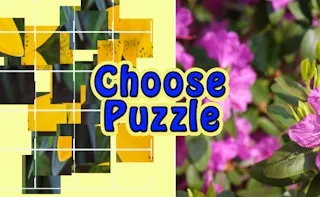
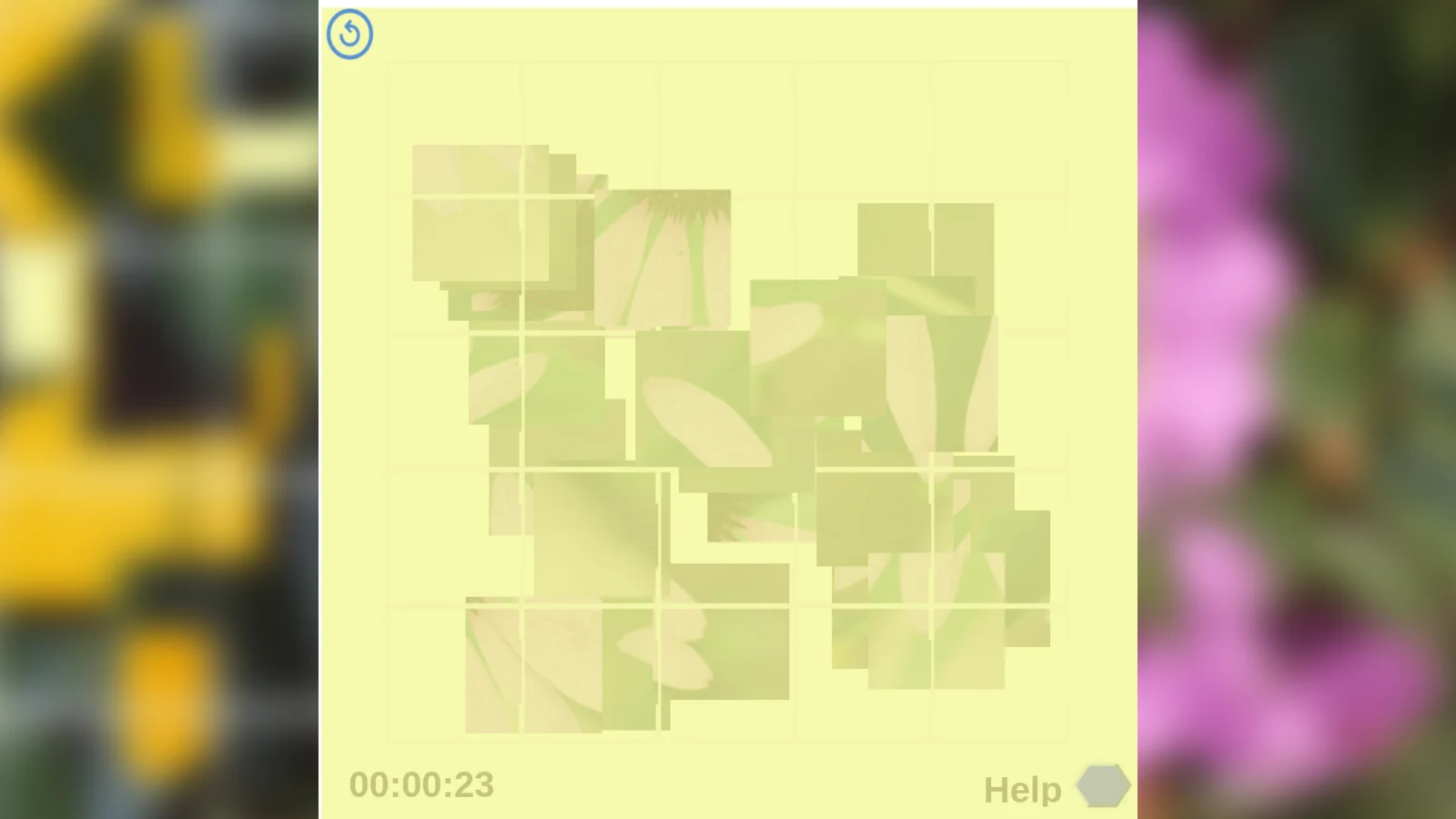
In Choose Puzzle, the selected screenshot shows a flower image broken into many pale yellow tiles with the Help button still available. That is a good frame because the picture is visible enough to guide the solve, but scrambled enough that random clicking would waste time. The useful play is to identify the flower shape, rebuild obvious sections, and use Help when the image starts to blur together.
Takeaway
Choose Puzzle is easier when you stop sliding randomly. Learn the picture, build the clearest sections first, and use empty space to move pieces with purpose.